
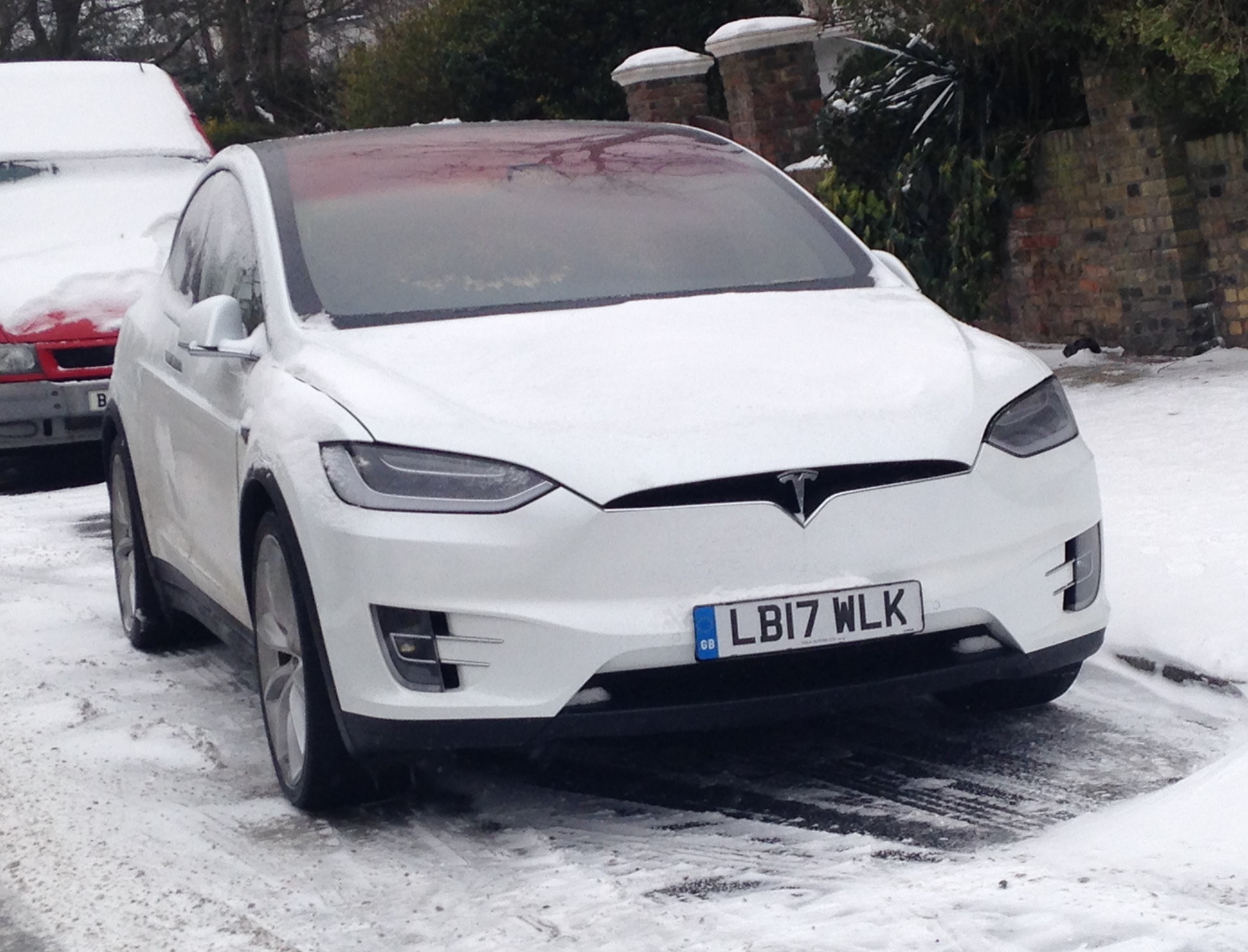
He would like a Tesla, but it’s not on for the moment.
While waiting for the right time, he has a Tamiya Grasshopper radio control electric car.
It came as a kit of parts so the first job was to build it. The instructions took some working out but he got it together.
At this point I thought if I constructed a mathematical model of the grasshopper we could use it to understand the Tesla.
We could test the mathematical model on the Grashopper by checking maximum speed, hill climbing ability, and duration and range on a single battery charge.
I would need some basic data. I quickly found out that this wasn’t going to be easy to find. Even the most obvious information was a problem.
For example, the kit said that the motor was an RS 380. A web search took me to the website of motor manufacturer Mabuchi which explained the code: R means it’s round, S is the brush material, 3 is a code for armature diameter, 8 is a code for motor length, 0 is a code for number of armature poles. Other codes were included on the Tamiya website, but I couldn’t make sense of them. Within this envelope, the major characteristics can vary a lot – maximum rpm, torque, power.
On the Tamiya packaging the battery was given as NiMH 2400mAh but I couldn’t find its discharge characteristic. Speed control was given as electronic but again, no characteristic.
We could find the mass, the dimensions, and the gear ratio, but we would also need a range of other coefficients such as transmission efficiency, drag coefficient and rolling resistance. I would estimate them as best I could
So that was my plan. I have built my model and we are developing it and testing it. Agreement between mathematical model and tests on the Grasshopper is good so far, but there are more tests to come.
As we continue the testing I will describe what I have done so far. Maybe you have already made a successful model, or have additional data I could use. If you have I’d be delighted to hear from you.
I will describe my progress in a series of blogs and collect them on a web page for convenience. My proposed scheme (it might change) is:
1 Finding a representative motor
2 Modelling the motor
3 Modelling the battery
4 Efficiencies
5 Resistance to motion
6 Review
I might combine some of these into a single blog – or split them. It all depends.
The next post will be on finding a representative motor.
 RhymeAndReason
wow
LikeLike